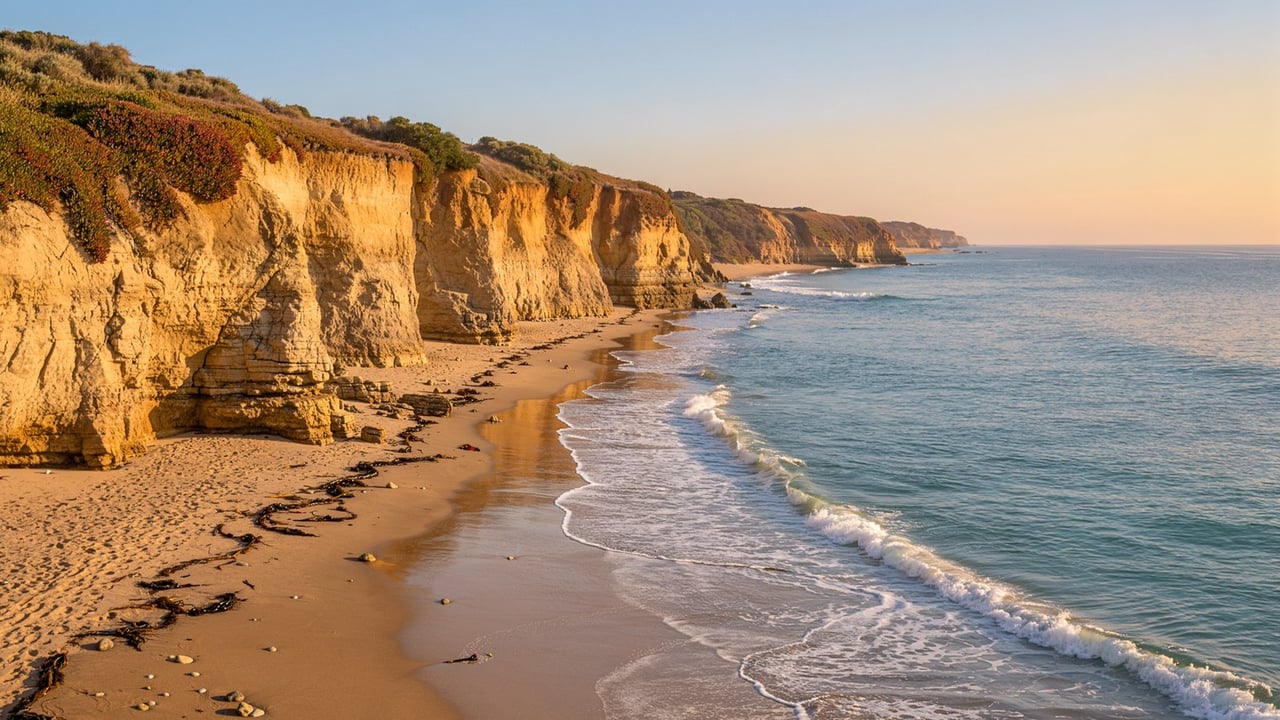
No route has been chosen yet. SANDAG says it is still studying alternatives to move the rail line off the Del Mar bluffs, that a decision has not been made on which alignment will be built, and that it is too soon to know how many homes may be affected. Buyers should track the draft environmental documents. [1]
Project details are still being studied. Check SANDAG's current map and documents for the specific address before you rely on any assumption about the route.
What Has SANDAG Actually Decided About the Del Mar Rail Line?
SANDAG has decided to study alternatives, not to build a particular one. Its page says the Board approved analysis of four alignments, including the no build option, and that a fifth alignment surfaced during 2025 scoping. A Del Mar city newsletter in March 2026 described five alternatives. Use the current SANDAG map, not a count. [1][3]
The project responds to landslides, erosion and seismic activity that have caused bluff collapses and temporary rail shutdowns in Del Mar. In the short term SANDAG is stabilizing the bluffs, and in the long term it is exploring a realignment. Technical studies to support a Draft EIR and Draft EIS began in September 2025. [1]
The history explains why certain streets come up in conversation. SANDAG says the 2007 program EIR/EIS identified tunnel options under Camino Del Mar or under I-5, and later studies refined alignments named Camino Del Mar, Crest Canyon Higher Speed, Crest Canyon Above, Crest Canyon Below and I-5. Names in past studies are not adopted routes. [1]
SANDAG also lists a Del Mar Bluffs Double Track Reinforced concept that would keep the rail on the bluffs and add a second track to the east within the right of way, and it must study a no project alternative. [1]
In March 2026, SANDAG told the Del Mar City Council about four rail related efforts: bluff stabilization Phase 5, expected to be substantially complete in fall 2026, access improvements, a new double tracked San Dieguito Lagoon bridge, and the realignment study. [3]
Known vs. Not Yet Known
Topic | What SANDAG says now | Status for buyers |
|---|---|---|
Chosen route | No decision on which alignment will be built [1] | Unknown |
Homes affected | Too soon to know; no numbers reported [1] | Unknown |
Tunnel depth | Varies; in many areas more than 300 feet below the surface [1] | Depends on final design |
Noise and vibration | To be studied in the environmental phase [1] | Watch the Draft EIR and EIS |
Rail service during construction | Operations will continue [1] | Stated goal |
What Happens If SANDAG Needs Property for the Project?
SANDAG says acquisition would not typically begin until after environmental clearance and further design, once the route and needed property interests are confirmed. Interests could be full or partial, temporary or permanent, and could include subsurface tunnel easements, which SANDAG says typically do not require owners to relocate. [2]
If a property interest is needed, SANDAG describes a process that starts with a notice of decision to appraise and an independent appraisal, followed by an offer based on the full appraised value. It says it would reimburse an owner's reasonable appraisal costs up to $5,000. [2]
SANDAG says it seeks voluntary agreements first. If that fails, the Board can hold a public hearing on a Resolution of Necessity, and the owner has a right to appear. If eminent domain proceeds, a jury would typically decide just compensation. [2]
SANDAG also cautions that an interest identified in a draft environmental document does not necessarily mean it will be acquired. For a buyer, a mention in a draft is a signal to investigate, not a conclusion. [2]
How Should a Del Mar Buyer Factor the Project Into an Offer?
Treat it as an open question to research during your contingency period. Compare the property location with SANDAG's current alignment map, read the latest project notices, review the seller's disclosures and title report, and set aside time to read the Draft EIR when it is released. Avoid assumptions about value in either direction. [1][2]
SANDAG lists the topics the environmental analysis will cover, including noise and vibration, geology and soils, coastal zones, land use, population and housing, and transportation. Those chapters are where property specific effects will be described. [1]
Survey and testing crews may be working in parts of Del Mar. SANDAG posted a technical studies notice, updated September 2, 2026, about engineering field surveys and noise measurements. Seeing crews near a home is not evidence that a route has been selected. [1]
Ask the seller about any notices they have received from SANDAG or the city. Project plans and public agency policies change, so confirm the current status directly with SANDAG before you rely on it. Ordinances and local policies often change, so confirm the current local rule with the city or agency before you rely on it.
For buyers in the $2 million to $4 million range and above, view, access and quiet can matter a great deal. That is exactly why a documented, dated review of the project belongs in your due diligence file. If you are comparing buyer agents, commissions are always negotiable between consumers and brokers.
Del Mar Rail Project Buyer Checklist
- Compare the address with SANDAG's current alignment options map
- Save a dated copy of the SANDAG project page and notices you reviewed
- Ask the seller for any SANDAG or city correspondence about the property
- Review the preliminary title report for recorded easements
- Sign up for SANDAG project updates at [email protected]
- Plan to read the Draft EIR and EIS property and noise chapters when released
- Keep your inspection and contingency timelines realistic for this research
Frequently Asked Questions
These five answers cover what Del Mar buyers ask most about the rail realignment. They reflect SANDAG's statements as of our review and will change as environmental documents are released, so recheck the project page before you rely on any point. Sources were reviewed November 18, 2026 PST.
Has SANDAG chosen a route for the Del Mar rail tunnel?
No. SANDAG says a decision has not been made on which alignment will be built, and all practical alternatives are still being studied under CEQA and NEPA. [1]
Will my Del Mar home be acquired for the project?
SANDAG says it is too early to know what property interests might be required, and acquisition would not typically begin until after environmental clearance and further design. [2]
How deep would a rail tunnel be under Del Mar?
SANDAG says depth would vary with the terrain, and in many areas the tunnel would be more than 300 feet below the surface. Final depth depends on the alignment and design. [1]
Would a tunnel easement force me to move?
SANDAG says subsurface tunnel easements typically do not require owners or occupants to relocate, though the same legal acquisition procedures would apply. [2]
Where can I follow the Del Mar rail realignment?
SANDAG posts updates on its LOSSAN Rail Realignment page and takes questions at [email protected]. The City of Del Mar also reports rail updates in its weekly newsletter. [1][3]
Sources
These primary sources support the project statements in this guide. Each entry shows its document date, or notes when a page is undated, along with the date we reviewed it. The project is in environmental review, so recheck SANDAG's current page and documents before relying on any detail.
- SANDAG, LOSSAN Rail Realignment. Live page; technical studies notice updated September 2, 2026; read November 18, 2026 PST.
- SANDAG, Real Estate and LOSSAN Rail Realignment. Undated live page; read November 18, 2026 PST.
- City of Del Mar, Del Mar Weekly, Issue No. 354. Dated March 20, 2026; read November 18, 2026 PST.
This article is general information, not legal, tax, financial or insurance advice. Confirm details for your property with the responsible agency and your own professionals before you act. Confirm project status with SANDAG and review title and disclosure questions with your escrow officer and attorney.