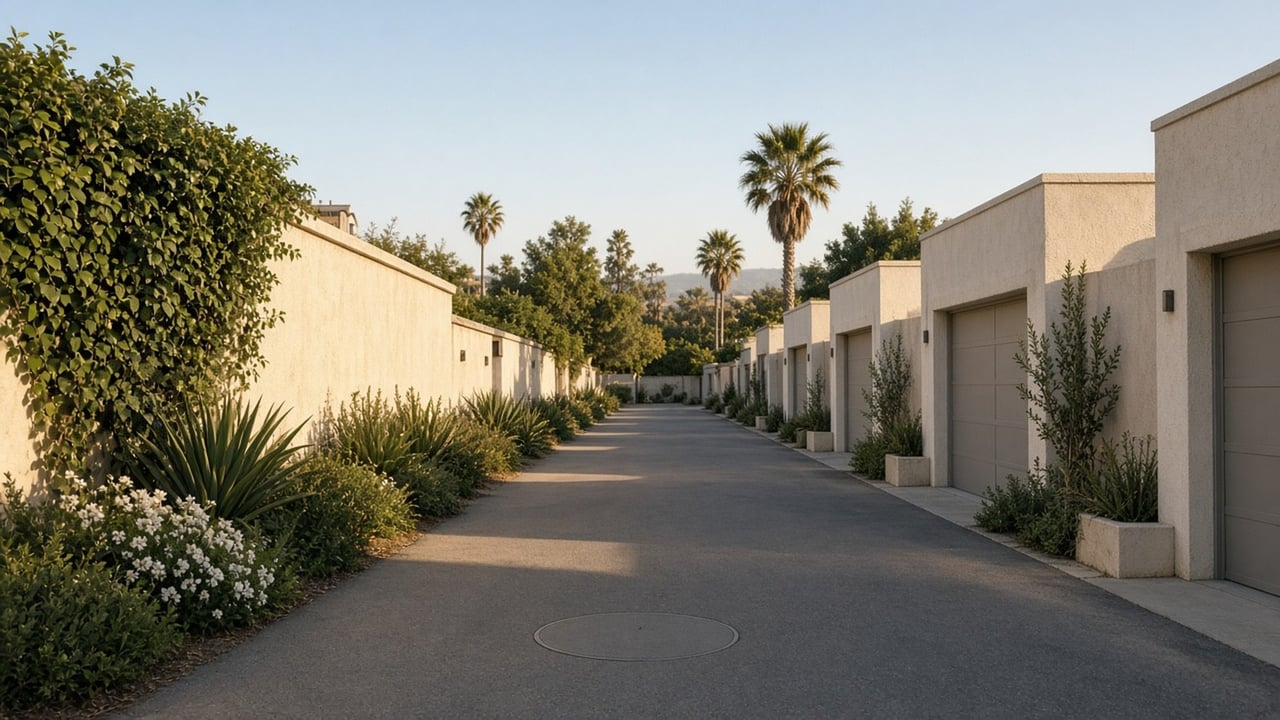
In La Jolla, a lateral can remain private all the way to the City sewer main, including the portion under a public street or alley. City guidance assigns routine maintenance to the property owner while describing conditional City assistance for certain failures beyond the property line. A cracked-pipe video alone is not a repair commitment. [1][2][4][5]
Confirm current repair-assistance eligibility with City of San Diego Public Utilities and the diagnosis with a licensed plumber. Have an attorney review any sale allocation.
Where Does Private Responsibility End?
The City of San Diego sewer-lateral guidance says the entire lateral from the building to its connection with the City main is private property. Routine cleaning and maintenance remain the owner's responsibility. The fact that a section lies under an alley does not, by itself, transfer ownership or routine maintenance to the City. [1][2][4][5]
This article concerns La Jolla properties within City of San Diego sewer jurisdiction. It is not a rule for Del Mar, Carlsbad or every North County sewer district. The City describes a lateral as the pipe connecting building drains to the main. Distinguish that pipe from the public main before discussing a defect with a buyer or contractor. [1]
The City's Sewer System Management Plan, revised November 4, 2026, likewise says the City does not own any portion of the service lateral and assigns the owner maintenance and repair from the building connection to the wye at the main. Council Policy 400-10 also places maintenance of the lateral, extending all the way to the main, with the property owner. [4][5]
The City also warns that encroachment laterals and laterals within easements follow different rules and policies. If the scope report shows a shared line, an easement or an unusual route, have the plumber and title adviser identify the arrangement. Do not apply the street-or-alley handout to an easement situation without a City answer. [1]
For a La Jolla seller, request the complete scope video and a written plumber explanation identifying the defect, its location and the evidence for the property-line determination. Treat an estimated camera distance as information to verify, not an automatic survey of where ownership or repair obligations change.
When Might the City Help With an Alley Failure?
Posted City materials distinguish routine maintenance from certain failures beyond the property line in a public right-of-way. The current Council Policy says the City will not provide assistance for lateral stoppages, while older operational guidance describes a conditional City response. Confirm eligibility in writing rather than advertising either as a guaranteed free repair. [1][2][4][5]
The currently posted Council Policy 400-10, effective March 11, 1985 and marked current on the City's council-policy site, is a claims policy. It says the City will not provide assistance for sewer lateral stoppages and that the owner, at the owner's expense, must have a licensed plumber clear the lateral. It also says that if the lateral beyond the property line is damaged to the point of needing repair or renewal, the plumber should contact the City. [5]
Operations policy C.12, effective January 30, 2003 and still posted by the City, says the owner must establish through a licensed plumber or certified drain-cleaning service that the failure is between the property line and main and beyond the owner's scope to relieve or repair. It also provides for billing City response costs when the owner could have maintained or repaired the line and failed to do so. The November 4, 2026 Sewer System Management Plan still cites Council Policy 400-10 and operations policy C.12 as the documents that define City responsibility. [2][4]
The City handout gives additional conditions: it will not dig on private property, and access blocked by a private structure can prevent City work. It describes a total-blockage or pipe-break response when sewer facilities are lost, subject to its conditions. For a structural defect without a full blockage, it says a plumber video may be submitted for review and consideration of action. Consideration is not an approved work order. [1]
Because the posted Council Policy, the 2003 operations policy and the undated handout do not read identically, ask Public Utilities to confirm the current process, the address eligibility and the next step in writing. Ask about the scope of assistance and current timing before relying on City work in escrow. Keep the City case reference and response with the plumbing report so a buyer can distinguish a request from a commitment.
Ownership, Maintenance and Assistance Are Different
Issue | City published guidance | Seller action |
|---|---|---|
Ownership to the main | Lateral remains private | Identify the line and connection |
Routine roots or grease cleaning | Owner maintenance responsibility | Keep maintenance records |
Qualifying failure beyond the lot | Posted documents differ; confirm | Have the plumber confirm and report |
Video of a structural defect | City may review and consider action | Obtain a written status, not an assumption |
How Should You Handle the Problem Before Selling?
Build the sale plan around the verified defect and current agency response, not an assumption that the City will solve it during escrow. Obtain the scope, a written diagnosis and an estimate for any owner work. Keep known condition disclosures and negotiated repair responsibility separate from an unresolved request for City assistance. [1][2][3]
The DRE disclosure guide identifies plumbing, sewer and septic defects among the conditions addressed by the Transfer Disclosure Statement. It is a 2005 general reference, not a complete current-form checklist. Have the agent and attorney use the current disclosures and describe the report, any completed work and any remaining uncertainty accurately. [3]
Before choosing a credit or repair, ask the contractor about access, permits, restoration and the work being quoted. A bid for work on the private lot may not answer the same question as work under pavement. This is a suggested scope-review process, not a claim that a particular permit or construction method applies to every lateral.
If City review remains pending, identify that status in the buyer file. Do not describe a video submission as acceptance of responsibility or treat an agency response estimate as a closing guarantee. Have the purchase documents address who follows up, who bears the agreed costs and what happens if the anticipated work is not completed. An attorney can help keep that allocation clear.
La Jolla Lateral Seller Checklist
- Confirm City sewer jurisdiction and whether an easement or shared line is involved
- Obtain the complete scope video and written diagnosis
- Verify the defect location relative to the property line and main
- Ask Public Utilities for current eligibility and process guidance
- Gather quotes, repair invoices and agency correspondence
- Disclose known conditions and document the negotiated responsibility
Frequently Asked Questions
These five answers address the main decisions covered in this guide. Use them with the records for your property, not as a substitute for checking a contract, approval or agency requirement. The sources were reviewed November 11, 2026 PST, and the right next step depends on what those records show.
Does the City own the lateral under my alley?
The City handout and the November 2026 Sewer System Management Plan say the lateral remains private to its connection with the main. Public pavement alone does not make the lateral public property.
Who handles routine cleaning?
The owner is responsible for routine maintenance and cleaning from the building to the City main under the published City guidance, policy C.12 and Council Policy 400-10.
Will the City fix every crack shown on a video?
No such promise appears in the guidance. The City says it may review a structural-defect video and consider action. Ask for the current address-specific determination.
Can I recover the plumber bill from the City?
Do not assume reimbursement. The City handout says it does not reimburse plumbing expenses. Council Policy 400-10 also says the City will not provide assistance for sewer lateral stoppages.
Must I obtain a sewer certification just because I sell?
This article does not establish a point-of-sale certification requirement. Confirm any current City, lender and purchase-contract requirements, and provide the reports and known-condition disclosures that apply.
Sources
The primary sources below support the factual and legal points in this guide. Each entry identifies its document date or notes when the page is undated, together with the review date. Recheck changing rules and confirm property-specific details with the responsible agency or professional before committing to a sale plan.
- City of San Diego, Sewer Laterals: Street or Alley. Undated published handout; current procedure should be reconfirmed; read November 11, 2026 PST.
- City of San Diego, Operations and Policy Manual C.12, Maintenance of Street/Alley Sewer Laterals. Effective January 30, 2003; still publicly posted; read November 11, 2026 PST.
- California DRE, Disclosures in Real Property Transactions, RE 6, pages 1 to 7. Sixth Edition, 2005; used only for its explanation of permit and condition disclosures, not as a complete current-law checklist; read November 11, 2026 PST.
- City of San Diego Public Utilities Department, Sewer System Management Plan. Revised November 4, 2026; read November 11, 2026 PST.
- City of San Diego, Council Policy 400-10, Claims Related to Water Main Breaks and Sewer Backups. Effective March 11, 1985; posted as current; read November 11, 2026 PST.
Confirm current repair-assistance eligibility with City of San Diego Public Utilities and the diagnosis with a licensed plumber. Have an attorney review any sale allocation.